Posts

Advertising assessment learner response

  Advertising assessment learner response: blog tasks 1) Type up your  WWW/EBI feedback in  full  (you don't need to write the mark and grade if you want to keep this confidential).  WWW: this is a very strong assessment with the potential to go even higher. Well done! Really good knowledge of the CSPs. EBI: -make sure references to the CSPs are detailed and accurate. - to push onto a grade 7+, we need to work on more sophisticated aspects of terminology such as intertextuality. 2) Read the  mark scheme for this assessment  carefully. Write down the mark you achieved for each question:  Q1:  2 marks Q2:  8 marks Q3:  4 marks Q4: 7 marks 3)  Look specifically at  question 2  - the OMO 12-mark question. Pick out  three  points from the mark scheme that you didn't include in your answer.  - Specialist terminology is used appropriately and effectively throughout. -  Excellent knowledge and understandin...
Advertising & Marketing: Final index

  Advertising & Marketing: Final index 1) Advertising and Marketing: Key conventions 2) Gender stereotypes in advertising  3) January assessment learner response 4) Advertising CSP 1: OMO print advert  5) Advertising CSP 2: Audrey Hepburn Galaxy advert 6) Advertising CSP 3: Represent NHS Blood campaign 

Represent NHS Blood & Transplant campaign

  Represent NHS Blood & Transplant campaign: blog tasks Work through the tasks in this blogpost to make sure you're an expert on this CSP. 1) What does BAME stand for? Black, Asian and minority ethnic 2) Why is there a need for blood in the BAME community?  to provide better matched blood for those who need it 3) What does this advert want people to do once they've seen it (the 'call to action')? This advert wants the audience (the Black and Asian community) to donate their blood to the NHS so they can save people's lives. They want to do this because they are in need of the rare blood. 4) Why is the advert called 'Represent'? 5) Why have the producers chosen famous BAME celebrities to feature in the advert? Give an example of three well-known people who appear in the advert and why they are famous - make sure you  write their names and spell them accurately . The producers have chosen to use famous BAME celebrities to feature in the advert to represent ...

Galaxy advert CSP

  Galaxy 'Chauffeur' advert: blog tasks Re-watch the Galaxy advert above then answer the questions below: 1) What  key conventions  of TV advertising can you find in the Galaxy advert? Intertextuality and nostalgia 2) What is the  key message  the Galaxy advert is communicating about its chocolate? The slogan for the advert will help you with this question. The whole theme of the advert is luxury and fanciness so it shows the audience the richness of the chocolate and why people should by it as of it's exquisite taste. 3) Who is Audrey Hepburn and w hy did Galaxy select Audrey Hepburn for this advert? Audrey Hepburn was a British actress and Galaxy chose her as she represents heritage, classiness and elegance, so from a strategic point of view, 4) What is intertextuality? When one media text refers to or suggests another media text. 5) What Audrey Hepburn films are suggested in this advert and how is this effect created (e.g. mise-en-scene - CLAMPS: costume, lig...

OMO advert CSP blog tasks

Image
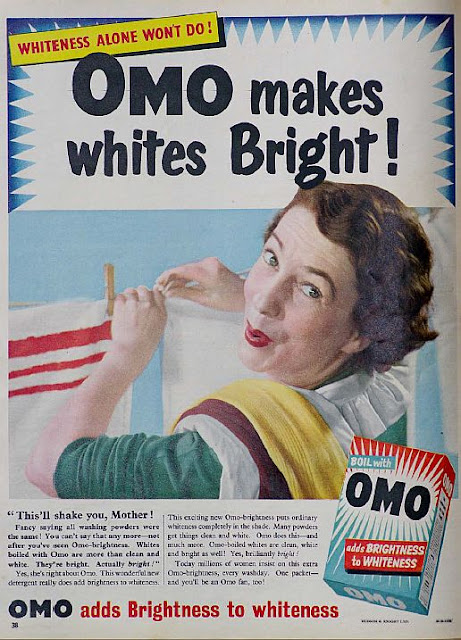
  OMO advert: blog tasks 1) What year was the advert produced? 1955 2) How were women represented in most adverts in the 1950s? Add as much detail to this answer as you can as these are the social, cultural and historical contexts we will need to write about in the exam. In most adverts in the 1950s, women were presented as housewives and mothers. They were told to behave in certain ways and follow certain expectations. Additionally, women were expected to not only behave in certain ways but look in certain ways; they were expected to wear makeup and look nice and well- presented whilst fulfilling their jobs as housewives and mothers. Lastly, women were expected to be happy as housewives and mothers since world war 2 was finished and over with and they could go back to their normalised stereotypical lives. 3) How does the heading message ('OMO makes whites bright') and the style of the text promote the product? The heading message uses rhyming words to emphasise their point on ...

January assessment learner response

  Your learner response is as follows: 1) Type up your feedback in  full  (you don't need to write the mark and grade if you want to keep this confidential). WWW- This is a very solid assessment with clear potential to go higher. I can see you have revised so now it is about developing exam technique to open up the top levels. EBI- revise media codes and vertical integration - for q6, you need detailed and specific reference to the CSPs. I have an example answer on the blog that will demonstrate this. 2) Read  the mark scheme for this assessment  carefully (you'll need your Greenford Google login to access this). Write down the mark you achieved for each question: Q1: 1 Q2: 0 - need to revise media codes Q3: 5 - need to include stereotypes from the 1940s (wartime). Q4: 1 - need to revise vertical integration benefits. Q5: 2 Q6: 9 - need more specific references and examples from the CSPs. Where you didn't achieve full marks, write  WHY  you think you m...

Gender representation in advertising

Image
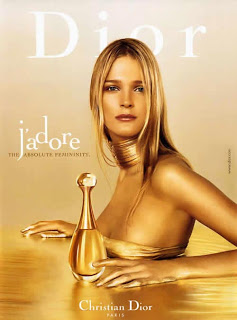
  Gender representation in advertising: blog tasks 1) Find  three  adverts featuring women that are from the 1950s or 1960s.  Save the images to your Media folder as jpegs and then import them into your blog post.  Hint:  You may wish to look at car, perfume or cleaning products but can use any product you wish. 2) Find  three  adverts featuring women that are from post-2000.  Save the images to your Media folder as jpegs and then import them into your blog post. 3) What stereotypes of women can you find in the 1950s and 1960s adverts? Give specific examples.  This advert suggests that women can only be happy with cleaning products and things that are linked to cleaning. This shows that people think of women as housewives and it shows that even for Christmas, women would want these products as their Christmas gifts. 4) What stereotypes of women can you find in the post-2000s adverts? Give specific examples. This advertisement shows that ...